The Booth Apparel Playbook
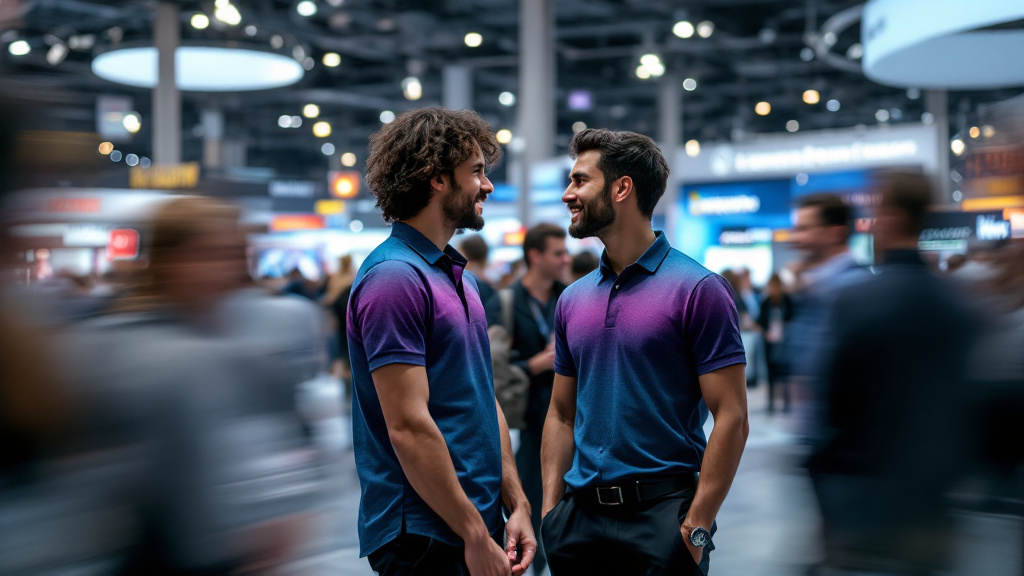
Dana K. runs field marketing at Poly9. Last fall she put ten people on a booth at three expos in a row, and strangers kept stopping her team in the aisles to ask about the tees. Her purple-to-pink gradient, the one that had lived on every slide deck, printed as a geometric across the chest, with the same shape stitched tonally on the piqué polos. The booth stayed at its fixed address while ten people carried the design across the whole floor.
We spent the rest of the fall circuit watching which booth apparel works and which merely exists, and this playbook is what we wrote down.
What reads from across the aisle
Booth apparel gets approved in an office at arm's length and judged from across an aisle. Most of it passes the first test and fails the second. The pieces that hold up at that distance have four things in common:
- One saturated color on every team member. From across the hall nobody reads a logo, but they can follow a block of color moving through a crowd.
- Pattern before logo size. An all-over pattern looks designed from any distance, and enlarging a chest logo only makes it louder. An edge-to-edge DTF print on the tee is the practical way to get that pattern.
- A designed back. Half of booth duty is done facing the demo screen. The teams that photograph well from behind planned for it, with a back print or the mark at the yoke.
- A quiet polo. The tee carries the gradient at full volume. The polo repeats the same shape in tonal thread for the people doing the talking.
Dress for a hall that runs cold, then hot.
Expo halls are cold when the doors open and hot by the afternoon, under lighting that forgives nothing. The loadout we've watched hold up through a full show looks like this:
- Six tops per person for a three-day show. That's three polos and three tees each, enough that nobody's day-three shirt has already done day one.
- A zip layer for the cold hours. The zip hoodie goes on and off over a headset and a lanyard without the hair-and-badge mess of a pullover. It's cut roomy through the body and true in the sleeve.
- Caps for the floor team. A cap is visible across a seated session room where a chest mark isn't. Give them to the people who walk the floor, and your colors show up away from the booth as well as at it.
- Cotton, not a wicking blend. The tee is 220 GSM ring-spun cotton and the polo is 200 GSM piqué, and neither looks like a gym shirt in a photo.
How far ahead to order booth apparel
Every booth apparel disaster we've heard about started with an order placed too late. The schedule is fixed. From the day you approve the design, the order spends three weeks in production and two in shipping. Before that comes however long your team takes to collect sizes and sign off. Count back 8 to 10 weeks from the show. If you want a paid sample set first, it adds about two weeks. The backwards schedule, with a table you can lift into your project plan, is in the booth apparel guide.
The part teams miss is how little there is to decide after the first show. The design is proven, and we keep it on file with your sizes. Topping up for the next city is one email with a quantity in it, and it runs on the same production and shipping schedule as the first order. Poly9 ran three fall expos on one July design sprint, and by September the only work left was logistics.
Packing for show morning
- Kits packed per person and name-sleeved, which turns handout into a few minutes instead of an hour of sorting size piles.
- Spares in a labeled box in the booth freight, M to XL, for the spill and the exec who decides on the morning to work the booth.
- A garment steamer in the crate, because a fold crease on the first morning undoes the work that went into the design.
- A hotel-laundry plan for a multi-city run, or a second set shipped to city two.
Three mistakes we keep seeing.
Good teams waste booth money in the same few ways. The first is reordering last year's sizes without collecting them again, when rosters change and so do bodies. The second is putting the year or the show name on the garment, which dates it the moment the hall empties. A brand pattern would have lasted to the next show. The third is dressing only the booth staff while the executives who fly in wear their own sweaters. That splits the team's look exactly where the biggest conversations happen. All three cost nothing to fix at order time, and none can be fixed on show morning.
What to ask in the debrief
After the show, put two questions to the marketing retro: what did strangers ask about, and what did staff wear off-shift versus leave in the hotel. Treat the answers as next season's brief. Reorder the pieces people chose and cut the ones they left behind.
The number we'd track is the one Dana stumbled into, conversations started per garment. Her team carried the design to lunch and through the aisles, and the booth wall stayed where it was built.
The full planning version, with quantity tables and the week-by-week schedule, is in the Trade Show Booth Apparel guide. If there's a show on the calendar, the Design Studio will design the capsule across all eight products and give you a link to it.