Anatomy of a New-Hire Kit People Post About
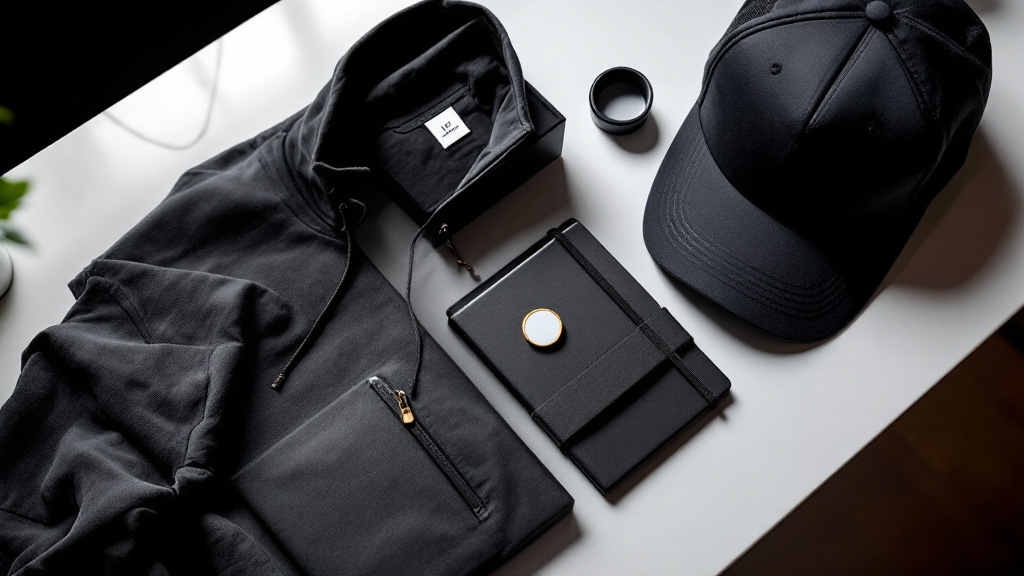
The post goes up on a Monday morning. It shows a box on a kitchen table, a hoodie folded with the name band face up, and a caption somewhere between "day one" and "okay, the merch is good." Nobody in marketing asked for it, and it reaches exactly the people the company wants to hire next.
We pay attention to which kits end up in those posts. Budget barely shows up in the pattern, and what the posted kits do share is five decisions about what goes in the box and when it arrives.
1. Three pieces or fewer
The kits that get posted hold three pieces or fewer. The ones left on a shelf are seven-item hauls in which the pen and the stress ball drag down the hoodie. Three pieces in a box read as a gift, where a pile of seven looks like a giveaway table.
The set that works starts with a hero piece, either the 330 GSM zip hoodie or the pullover hoodie. Add an everyday piece, a tee or a polo, and finish with a cap. Our onboarding kit guide works through the tiers. With one print on each piece, at list and before any tier, the kit comes to $51.83: $23.96 for the hoodie, $17.02 for the tee and $10.85 for the cap.
2. The name is in frame.
Look at the kits that get posted and there's a name in the shot, on the band or on a card. No other dollar in the kit does as much work. A hoodie on its own is a nice object, but a hoodie with your name on the packaging shows the company was expecting you, and that's the part people photograph.
Every piece we ship comes in a paper band printed with the wearer's name for that reason. The name makes the box feel like a welcome instead of a delivery of inventory, and it also solves hand-out because nobody has to dig through a size-M pile.
3. Every piece passes the weekend test.
Nobody posts a garment they wouldn't wear. The kits that surface carry pieces designed like product, with a tonal mark or a pattern-led print and the logo kept small or worked into the graphic instead of stamped across the chest. We make that argument at length in why we embroider, and when DTF wins. The new hire has to be able to picture the hoodie at brunch, because a design that only makes sense at an all-hands gets worn at the all-hands and never photographed on purpose.
4. Arriving before day one
Timing is a design decision nobody sees. The same kit lands differently on a kitchen table the week before the start date than it does on a desk in week three. Before day one it's the physical confirmation, in the nervous gap between signing and starting, that they chose well, and that gap is when people post.
The operations are simpler than they sound. Trigger the order the day the offer is accepted, because once you approve the design the kit spends three weeks in production and another two in transit. After the first order, each batch of hires is one email with names, sizes and a quantity. Sizes ride along in the offer paperwork, and the sizing guide shows the XS to 4XL setup.
5. The order things come out of the box
Unboxing happens in a sequence, with one thing seen first and one thing touched first, and the posted kits control it. The note goes on top and the hero piece sits folded face up beneath it. There's no invoice or marketing insert in the box, nothing that smells like fulfillment. One handwritten sentence from the manager beats any printed welcome letter.
None of this costs much, but someone has to decide how the box will be opened before it's packed.
What a voluntary post is worth
A fair objection is that a voluntary post doesn't justify designing a box. Compare it with a sponsored post, which costs real budget to reach the same audience and reads as advertising. A new hire's day-one photo reaches their own network, dense with the people you're trying to recruit next, and reads as testimony. The kit was already in the budget. The posts cost nothing beyond the care that went into it.
A checklist to copy
- Keep it to three pieces and cut anything that isn't a garment or the note.
- Name showing the moment the lid comes off.
- Every garment passes the weekend test.
- Order when the offer is accepted so the kit arrives before day one.
- Note on top, hero piece face up, no paperwork in the box.
The program version of those five, with tiers and reorder mechanics, is in the full onboarding kit guide. To see your own kit, the Design Studio will propose one from your logo and give you a link to it.