Why Your Team Doesn't Wear the Merch
Forty conference polos in one drawer, none of them worn. That was Faraz's closet after eight years of buying apparel for sales and field teams, and he'd signed off on most of the polos himself. AffirmGear started with that drawer. Forty shirts don't go unworn for a single reason, and this post goes through five.
We've since looked inside a lot of other companies' drawers, and the reasons are boringly consistent. Five of them cover nearly every failed order, and each has a fix that costs less than the mistake did.
1. The blank was chosen by price
A garment gets worn when it beats what the wearer already owns. A thin promotional tee loses that contest to every shirt in the closet on day one.
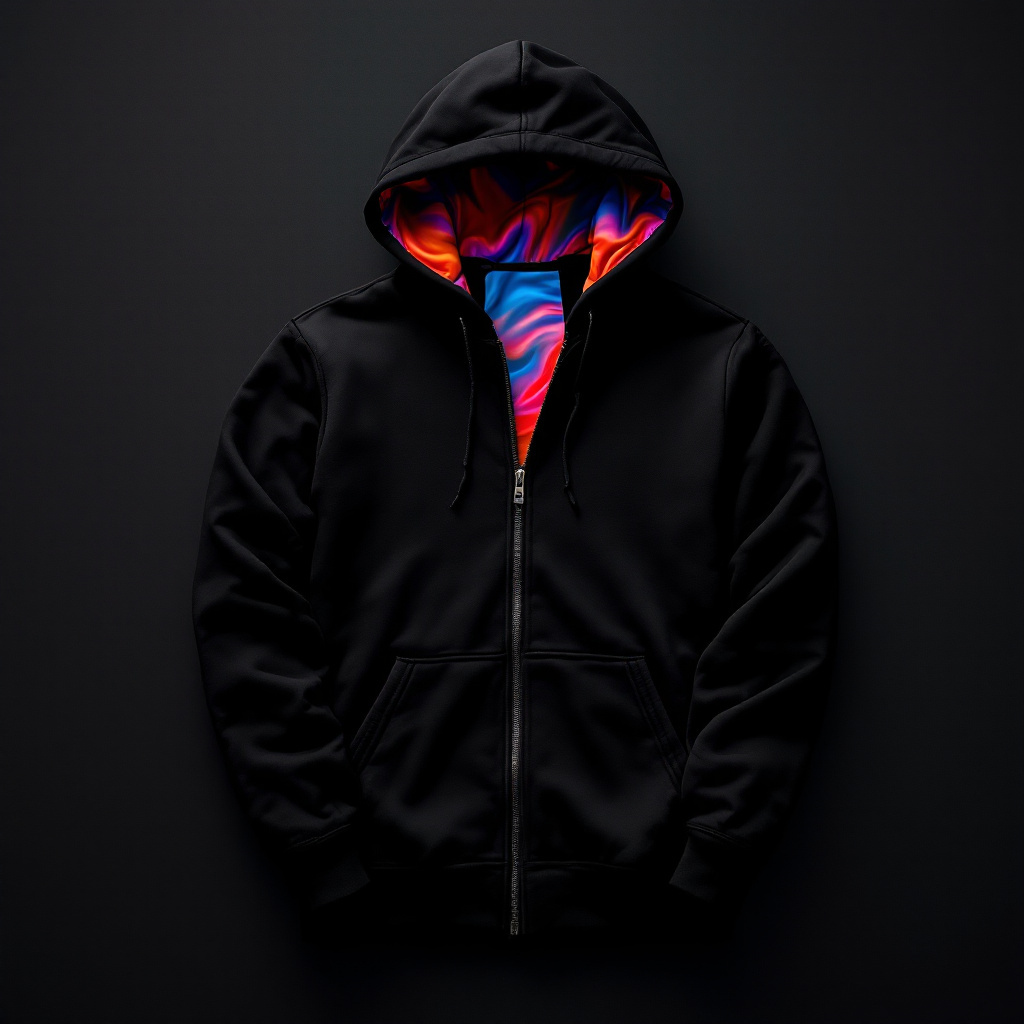
The fix is to buy the garment first and the decoration second. Our tee is 220 GSM combed ring-spun cotton and the hoodie is 330 GSM brushed fleece, at $17.02 and $23.96 with one print. If a supplier's sheet doesn't say the weight, the spec-sheet guide shows what to ask for, starting with fiber and whether the fabric is OEKO-TEX certified.
2. The logo is the size of a dinner plate
People don't wear a logo big enough to read across a parking lot, because it turns a hoodie into a uniform. The teams whose merch shows up on weekends chose a small mark and let the garment carry the rest.
Think in two placements. The first is a quiet embroidered mark on the chest or sleeve, up to about 4 in wide. The second, if the booth or the offsite needs a statement piece, is a DTF print on a separate garment that's meant to be big. Tone-on-tone is the safest version of small. Navy thread on navy fleece is visible at arm's length and invisible in a meeting. Why We Embroider (and When DTF Wins) has the reasoning.
3. The sizes were guessed
The classic order is a round number, mostly L and XL with a few M. The actual team is a third small and a quarter 2XL. The L pile ends up in a closet, and everyone handed the wrong size knows nobody asked them.
Collect sizes instead of estimating them. Every collection comes with a share link, and each person picks their own size from XS to 4XL at one price. Nobody at the tail of the size curve pays a surcharge or gets skipped. The sizing guide covers the difference between our tailored polo and the roomy fleece. Order a small buffer in the middle sizes for new hires and leave it at that.
4. The garment has a date on it
The chest says Sales Kickoff with the year under it, or Q3 Launch. When the event ends the garment expires with it, because nobody wants to wear last year's conference and a new hire doesn't want a hand-me-down from a launch they missed.
Put the brand on the garment and the campaign on the card. Northwind Labs runs one teal lattice collection year-round, and the hoodie a new hire gets in year two is the hoodie the first sixty people got. Design it once in the Design Studio. The design stays on file with us, and every reorder carries it forward.
5. The order arrived in a pile
It came as a cardboard box on the kitchen counter, with a sticky note that says take one. That box tells people the garment is surplus, and even an excellent garment reads as an afterthought if that's how it shows up.
Put a name on every piece. Everything we ship is sleeved with the wearer's name in a paper band, and a kit can go on a desk or into a mailer with nothing added. The name sorts the box in five minutes instead of an hour, and it turns company merch into something made for one person. Most of what people photograph in a new-hire kit is the sleeve. Anatomy of a New-Hire Kit People Post About goes through the rest.
What the five fixes cost a 60-person team
The fixes cost less than the drawer did, because most of them are decisions and add no line to the quote. Design, decoration and name-sleeved packaging are in the per-piece price. A 60-person team ordering a printed hoodie and tee each is 120 pieces, which clears the 50-piece tier. The hoodie drops from $23.96 to $21.08 and the tee from $17.02 to $14.98, so the 120 pieces come to $2,163.60 instead of $2,458.80 at list. Add printed polos for the thirty customer-facing people and the order reaches 150 pieces, where every piece in the mixed order steps down 22%. The hoodie is then $18.69, the tee $13.28 and the polo $15.74, and the whole order comes to $2,390.40. Thirty polos add a net $226.80 to the two-product order, or $7.56 apiece against a $20.18 list price. More worked examples like these are in the pricing guide.
The drawer of forty polos was never cheap, and nobody noticed it failing. Fix the five reasons and the same budget buys a hoodie someone reaches for on a Saturday.